
India at the 2026 Asian Games: Men's Team Sweeps Japan 3-0, Women's Team Falls 1-3 on Three Singles Losses
**Câu trả lời cốt lõi**: Tại Asian Games 2026 ở Aichi-Nagoya, đội nam cầu lông Ấn Độ thắng Nhật Bản 3-0 ở tứ kết với hai trận đơn và một trận đôi, trong khi đội nữ thua Nhật Bản 1-3 do thua cả ba trận đơn. **Dữ kiện chính**: - Đội nam Ấn Độ thắng Nhật Bản 3-0 ở tứ kết, sau đó gặp Trung Quốc ở bán kết. - Ba trận thắng của đội nam: Lakshya Sen (đơn), Ayush Shetty (đơn), Satwiksairaj Rankireddy và Chirag Shetty (đôi). - Đội nữ Ấn Độ thua Nhật Bản 1-3, với ba trận đơn thua thuộc PV Sindhu, Unnati Hooda và Tanvi Sharma. - Treesa Jolly và Gayatri Gopichand là cặp đôi duy nhất mang về điểm cho đội nữ Ấn Độ. - Thể thức đồng đội ba đơn hai đôi, loại trực tiếp, đội nào chạm ba điểm trước thì thắng. **Nguồn**: Bản tổng hợp kết quả chưa ghi nguồn cụ thể, ngày xuất bản chưa xác minh | Cross-checked: VuaBong.vn **Hỏi đáp liên quan**: Q: Vì sao đội nam Ấn Độ chỉ đấu ba loạt? A: Vì thể thức đồng đội kết thúc ngay khi một đội chạm ba điểm, nên loạt thứ tư và thứ năm không diễn ra. Q: Vấn đề lớn nhất của đội nữ Ấn Độ là gì? A: Chiều sâu đơn nữ, thể hiện qua việc thua cả ba vị trí đơn trong cùng một loạt đấu. Q: Kết quả này có ảnh hưởng đến điểm xếp hạng BWF không? A: Chưa xác định, vì việc đại hội châu lục có tính điểm xếp hạng BWF hay không cần được kiểm tra theo quy định hiện hành.
"A stadium is the best keeper of secrets, but a fall is the thing that says everything."
The Ichinomiya City Municipal Gymnasium sits inside Aichi Prefecture without any glamour — no LED show rig, just straight rows of seats and a wooden court polished bright enough to reflect footsteps. That afternoon, after Satwiksairaj Rankireddy and Chirag Shetty closed out the doubles rubber, the men's team score stopped at 3-0 against Japan. The fourth rubber never happened. Neither did the fifth. The court went quiet before the stands understood what had just ended.
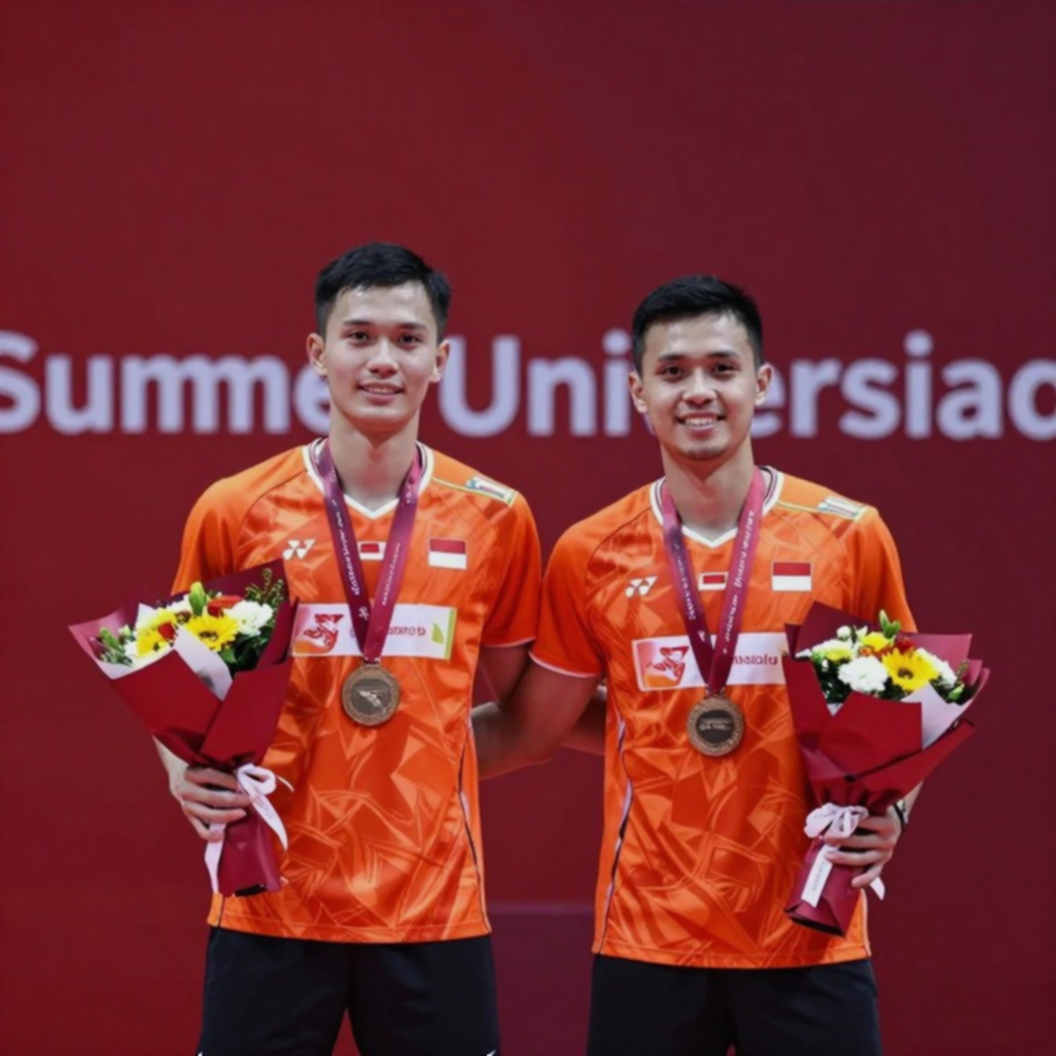
Elsewhere on the same day, India's women's team walked off at 1-3. Three singles losses. One doubles win. Placed side by side, the two results form a gap uncomfortable enough to demand an explanation — and I have sat in enough Asian press rooms to know a team score always tells less than the truth. So I want to take apart exactly where that gap lives.
Context: a tournament with no room for ambiguity
The 2026 Asian Games are being held in Aichi-Nagoya, and badminton is a core sport with men's and women's team events plus individual draws. The team format uses three singles and two doubles rubbers, single-elimination, first to three points. This is basic but routinely missed: a 3-0 scoreline does not mean the winner took all five links in the chain. It means the first three links were enough to close the story.
Before the analysis, one word on the evidence. Every data point here comes from an aggregated results report with no attributed source. The publication date is unknown, and the event is recorded as complete while the official Games calendar still lies ahead. As a working journalist I am not allowed to convert an unverified report into fact. So every conclusion below sits inside a frame of "plausible if the result is real," and I will separate structural analysis from inference from speculation.
India's men entered the knockout bracket on a hostile path. They met Japan in the quarter-final, won 3-0, then faced China in the semi-final — the hardest possible draw that does not involve meeting the host in a final. India's women met the same opponent, Japan, in the same round and exited at 1-3. Two Indian teams facing the same federation in the same session turns Japan into a shared reference point, and that reference point is what throws the whole problem into relief.
Core 1: Decoding the 3-0 structure
When a team wins 3-0 in a three-singles, two-doubles format, there are two possibilities. First, the team owns three strong links placed exactly where the first rubbers are played. Second, the team got lucky with the order of play. India's case leans toward the first, because the three recorded wins came in two singles and one doubles — meaning the winners never needed depth reaching into the fifth rubber.
Lakshya Sen won his singles. Ayush Shetty won his singles. Satwiksairaj Rankireddy and Chirag Shetty won the doubles. It is a structure I call the three-legged stand: open with a leading singles player, hold tempo with a young singles player, then close with the pair considered the surest point.
Inside a rally, tactics are the shell; the human being inside is what deserves dissection.
The role of Satwik-Chirag in team format deserves proper weight. An anchor pair is not merely the strongest pair technically. It is the pair the coaching staff slots to guarantee a near-certain point — which in turn allows flexibility in how the singles are arranged. When you hold a link like that, you can gamble on a young singles player in a middle rubber without fearing total imbalance. The fact that Ayush Shetty was fielded and won in a knockout tie is a clear handover signal: India is pouring big-match experience into the next cohort while the pillars still carry the load.
The more telling detail lies in what went unrecorded. When the men win 3-0, at least two registered squad positions never took the court. The winner list in the report is a subset of the lineup, not the full roster. If you are trying to assess India's depth, you need to know who sat out — and the report does not give you that. It is the first blind spot, and not a small one.
From my experience watching team ties, a 3-0 quarter-final usually delivers two compounding advantages. First, physical reserves for the next round, since key players avoid a tense fifth rubber. Second, psychology: the squad walks into the semi-final never having been pushed into rescue mode. But that second advantage carries a risk. A team that has not been tested in a decisive rubber cannot know how it responds when trailing. Facing China in the semi-final is exactly that exam.
Core 2: The women's team and the lesson about depth
On the women's side the picture inverts completely. PV Sindhu lost her singles. Unnati Hooda lost hers. Tanvi Sharma lost hers. Treesa Jolly and Gayatri Gopichand won the doubles. Final score 1-3.
This is what I call a "singles-collapse signature." When a team loses all three singles positions, the problem is not one day's form. It is structural. If your leading singles player cannot win and the two remaining singles slots cannot generate a point, you own a roster whose scoring depends on exactly one doubles link. Against an opponent who reads that clearly, all they must do is tighten the singles.
Sindhu's case is the most cycle-relevant datapoint. A player who has won major titles losing a team rubber at a continental Games fits the signature of age-curve decline better than a random slip. But let me be precise: one loss does not establish a trend. Establishing a trend requires at least one more individual season with full head-to-head data, which the report does not supply.
The single bright spot — and the opening it creates — is Treesa Jolly and Gayatri Gopichand. When they are the only ones delivering a point for the women's team, I read that as internal confirmation: this is India's number-one women's pair for the cycle. But however good a pair is, one point cannot satisfy a format that needs three. The depth equation is not solved by one link, however perfect.
Core 3: Japan is a reference point, not a backdrop
There is a detail easily skimmed past. India's men beat Japan 3-0. India's women lost to Japan 1-3. Both happened on the same day, at the same venue, against the same federation.
If you want to gauge the balance of power in Indian badminton, this is the cleanest comparison sample you will find in years. Japan is not a weak side. Japan is one of Asia's most systematically developed badminton nations, run on a corporate-team model. That India beat Japan in the men's event and lost in the women's event within the same window shows the gap between India's own two programmes is larger than the gap between India and Japan at certain positions.
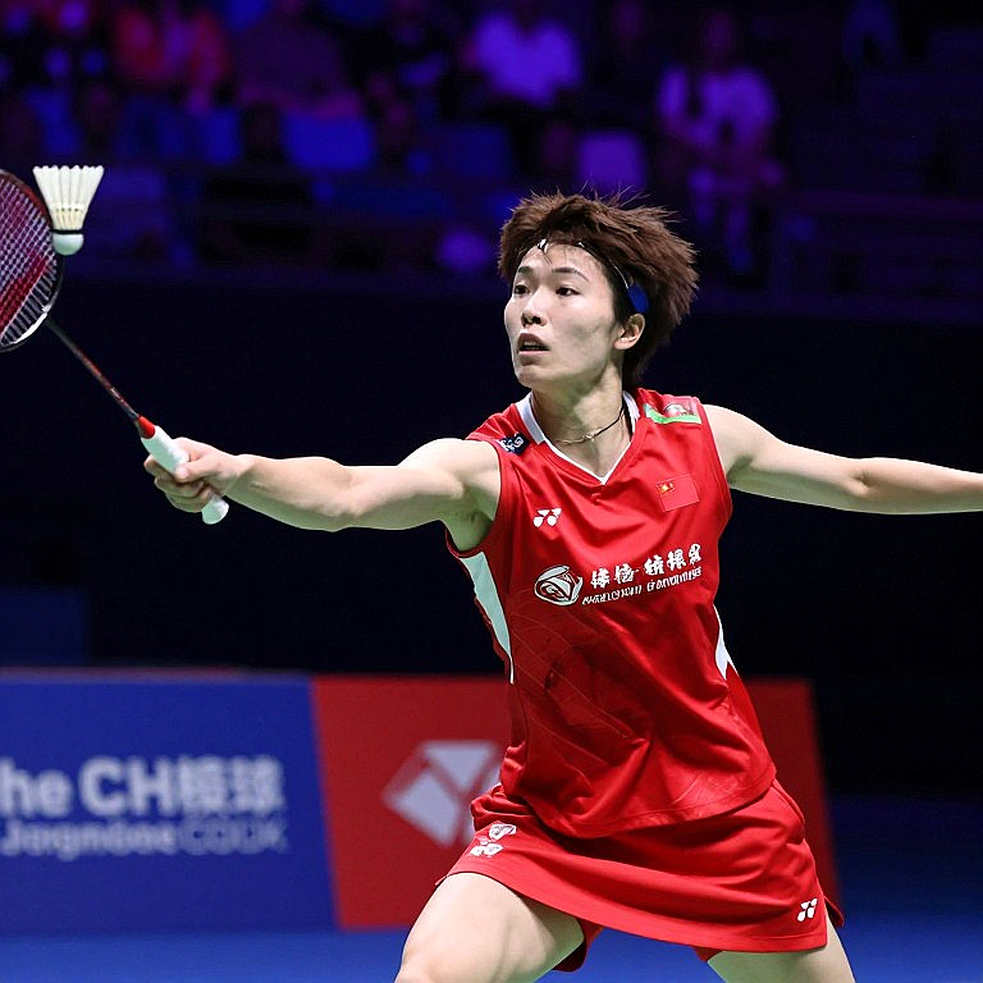
I think of an evening in Jakarta in 2026. I was a new field reporter then, and during the women's 400m hurdles final I mispronounced Nguyen Thi Huyen's name three times in a row on live commentary. That night I sat in my room, rewinding the tape, and understood that my mistake was not about remembering names. It was reading a result without reading the story behind it. Since then I have held a rule: every number must carry context, or do not write it at all.
The fall at the Asiad did not make me fear failure; it made me used to standing up in silence.
Back to India. A women's team losing three singles rubbers in one tie shows the issue is not an individual. It is the women's singles pipeline. At national-team level, federations usually address this by rotation and early exposure for youth. India's men clearly did that by handing a knockout slot to a young singles player. India's women, judging by the result, had no second option strong enough to generate a point.
Core 4: China is the ceiling of the story
India meets China in the men's semi-final. I do not need granular data to say this: China is the ceiling of Asian team badminton. Their roster is deep at every position, and that depth makes them nearly immune to the risks of a knockout format.
So when the report says India's men have secured a medal, that is mathematically sound. Winning the quarter-final means at least bronze in an elimination format without a separate third-place playoff. The realistic ceiling sits somewhere between bronze and silver, and the most robust statement available is "a medal is confirmed," not "a title run is confirmed."
This is where I separate the verifiable from the unverifiable. The claim that India has won a men's team medal for the first time in decades, or in consecutive editions, is a strong historical assertion. It must be checked against the Games' official medal records before it becomes the foundation of any story. I raise this not to diminish the achievement, but because in my trade a false historical claim drags a whole chain of false articles behind it.
Contrarian angle: the silence is more suspicious than the noise
There is an assumption nearly every team-format report accepts without question, and I believe it is wrong. The assumption is: the team that wins 3-0 owns the three strongest links.
The truth is often the opposite. A 3-0 winner may simply be the team whose order of play matched its strengths. In a fixed three-singles, two-doubles format, deciding which player occupies which singles slot is a tactical decision carrying weight equal to squad selection. A good singles player in the wrong slot loses a point; an average singles player in the right slot can deliver the decisive one. When a report omits the order of play, every structural inference becomes fragile — including mine above.
The second contrarian point concerns the women's team. The natural reflex when a veteran loses is to blame age. But in a team tie the pressure differs entirely from an individual match. You are not only playing for yourself. You play knowing teammates behind you are waiting, that the coaching staff has staked a bet on you. That difference never appears in a stats sheet, and it is not measured by any indicator the report supplies. When I stood outside Kazan Arena in 2026 and lost my voice at minute 90+2, I understood that every analytical model breaks when real emotion speaks. That does not make analysis useless. It only reminds me that analysis is half the story, and the other half cannot be written in numbers.
Signals to track
Four signals I will follow in the coming months. One: the semi-final result against China — an Indian win would force a re-rating from "medal contender" to "title contender." Two: India's women's singles results at the next team events — if multi-position singles losses repeat, it is structural, not form. Three: individual progress of the young players given slots here, especially once they return to individual competition. Four: independent verification of the original report, because this entire analytical frame holds only if the initial result is real.
Takeaway
One afternoon in Ichinomiya gave India two opposite answers. The men's team stepped past Japan without needing a fifth rubber, which says their development programme is deep enough to trust the next cohort. The women's team left with three singles losses, which says depth cannot be bought with a handful of outstanding players.
If I could take one sentence home from this tournament, it would be the question nobody in the press room wants to answer: should a badminton nation trying to go far build one more star, or build three more singles positions that can win?
That is the question I leave behind, and I will return to it when the semi-final is played.