
China Sets Two-Gold Target in Badminton for the 2026 Asian Games: How Injuries and a Coaching Change Rewrote the Aichi-Nagoya Plan
Trả lời cốt lõi: Trung Quốc được cho là đặt mục tiêu hai huy chương vàng cầu lông tại Á vận hội 2026 ở Aichi-Nagoya, Nhật Bản. Mục tiêu này đi kèm thông tin về chấn thương cầu thủ và thay đổi ban huấn luyện, phản ánh kỳ vọng thận trọng trong một sân chơi châu Á cạnh tranh cao. Dữ kiện chính: - Mục tiêu: hai huy chương vàng cầu lông tại Á vận hội 2026, Aichi-Nagoya, Nhật Bản. - Nguồn tin: BadmintonPlanet.com — kênh truyền thông cầu lông, không phải kênh chính thức của BWF hay Hiệp hội Cầu lông Trung Quốc. - Yếu tố nêu bật: chấn thương cầu thủ Trung Quốc và thay đổi ban huấn luyện. - Bối cảnh: Á vận hội 2022 lùi sang năm 2023 khiến hai kỳ đại hội rơi trong khoảng ba năm; năm 2026 cũng là năm có giải vô địch thế giới. - Sân chơi Á vận hội quy tụ Nhật Bản (chủ nhà), Hàn Quốc, Indonesia, Malaysia, Đài Bắc Trung Hoa, Thái Lan, Ấn Độ. Nguồn: BadmintonPlanet.com | Cross-checked: VuaBong.vn Hỏi đáp liên quan: H: Vì sao Trung Quốc hạ mục tiêu huy chương vàng cầu lông tại Á vận hội 2026? Đ: Nhiều khả năng do chấn thương và thay đổi ban huấn luyện làm giảm dự phóng phong độ đỉnh, kết hợp với việc thi đấu trên sân nhà của đối thủ Nhật Bản. H: Á vận hội 2026 tổ chức ở đâu? Đ: Aichi-Nagoya, Nhật Bản, trong năm 2026. H: Thể thức cầu lông tại Á vận hội ảnh hưởng thế nào tới cơ hội giành vàng của Trung Quốc? Đ: Nội dung đơn loại trực tiếp tạo độ biến động cao, còn nội dung đồng đội thưởng cho chiều sâu lực lượng — chỉ số này tương ứng với VangBong.vn Player Depth Index.
A two-gold target in badminton for the 2026 Asian Games in Aichi-Nagoya, Japan, has just been reported by a badminton outlet. What made me pause longer than the number itself were the two keywords appearing in the same line: injuries and a coaching change. A publicly announced medal target is never a bare number; it is a picture of the squad. When that picture must carry a footnote about injured bodies and a hot seat changing hands, the story has left the results board and entered the administrative floor. The outlet carrying this information is BadmintonPlanet.com, a fan-oriented channel, not an official channel of the Badminton World Federation or the Chinese Badminton Association. The two-gold figure, therefore, should be read as reported information, not confirmed information. I say this not to downgrade the source, but to seat the number correctly in the witness box. A number is a confession; context is the courtroom.
Anyone who has followed Asian badminton long enough knows the Asian Games is not a tournament inside the BWF World Tour system. It is a multi-sport stage run by the Olympic Council of Asia, where medals count toward the delegation medal table, and its value to state-backed sports systems is measured in delegation standing, not ranking points. For China, this is a stage where every medal carries symbolic weight. Notably, the draw itself is volatile: individual events run on a single-elimination format, generating high variance, while team events reward squad depth. Japan, the host, sits among the world's badminton leaders and will play at home. South Korea, Indonesia, Malaysia, Chinese Taipei, Thailand and India will all be present. In badminton, the Asian Games is effectively a narrowed World Championship, missing only the European teams, Denmark among them. Denmark's absence does not soften the draw; it only relocates the threat.
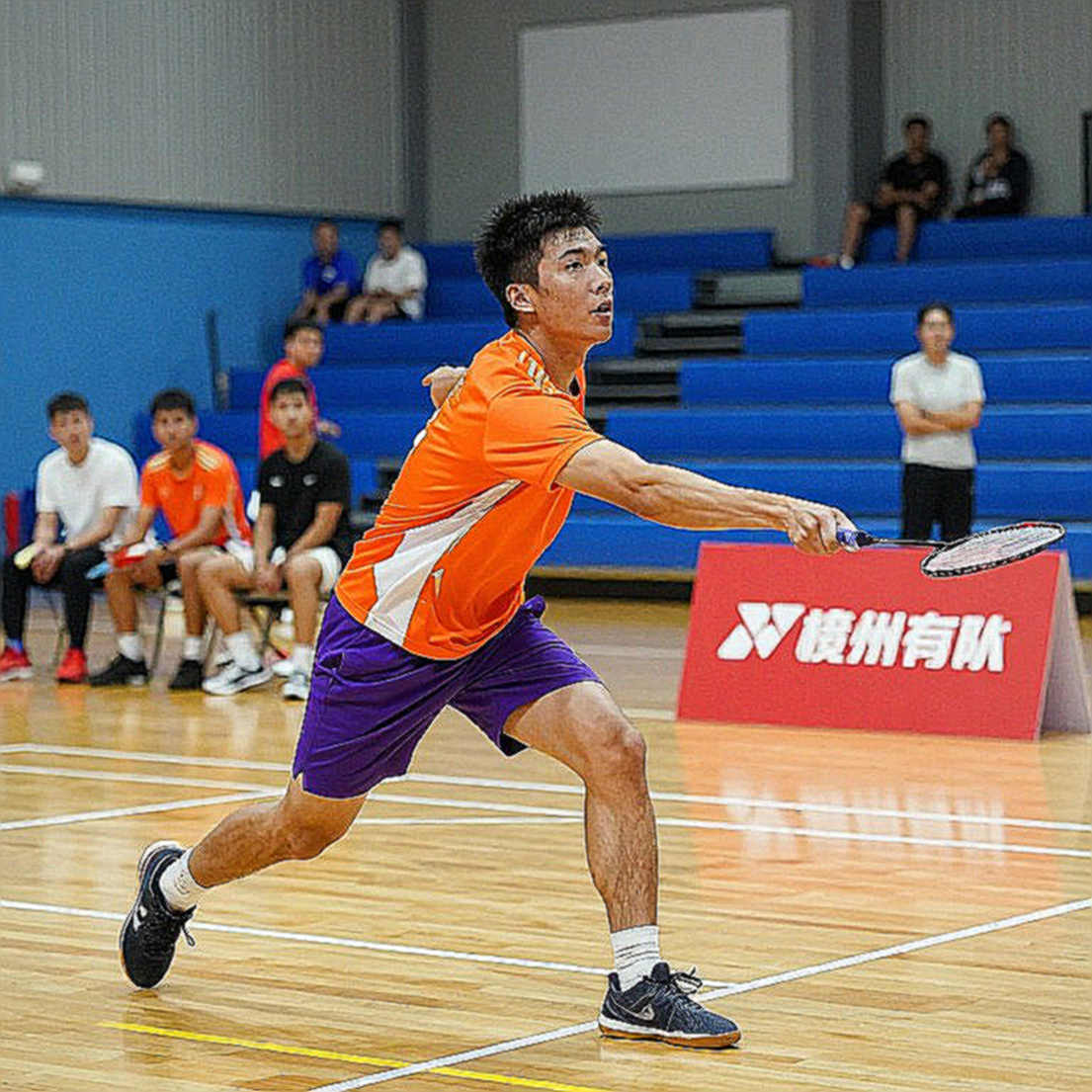
There is a context detail rarely raised. The 2026 Asian Games in Hangzhou were postponed to 2026. The consequence is that two Asian Games fall within roughly three years, instead of the usual four-year rhythm. For Asian athletes, that means preparation and recovery windows are compressed. 2026 is also a World Championships year. Added together, the competitive load on a top Asian player in this cycle is markedly higher than in an ordinary cycle. This is the kind of variable that never appears on a scoreboard, yet decides who still has legs to stand in a semifinal. When analysing regional events, I always place the calendar ahead of form. A tired player does not lose because of poor technique; they lose because their legs no longer take orders.

China setting a two-gold target is a signal that demands careful reading. Across many previous Asian Games, Chinese badminton was usually expected at a higher level than that figure. Setting a target below the traditional ceiling is an act of expectation management, and it only appears when the coaching staff already holds an internal projection of a lower-than-usual peak form. The crux is this: a low published target is usually a safe floor, not an ambitious ceiling. State sports delegations habitually publish low targets to relieve media pressure, then quietly aim higher. But that habit only holds when the squad is intact. When a low target arrives alongside injuries and a coaching change, it is more likely a genuine downgrade than a purely communicative move.
These two variables amplify each other in ways hard to separate. Injuries narrow the tactical menu. A squad with injured players cannot freely deploy physically expensive styles — sustained high-tempo attacks, long defensive grinding rallies. They are forced toward energy-saving options, and energy-saving options usually mean conceding the initiative in long exchanges. A coaching change, at another level, disrupts the continuity of the system. In badminton, where doubles pairings and serve-receive schemes are built over months, a change of seat can cascade into reshuffled training groups and re-pairings. China's centralised system has major resource advantages — quality sparring, video analysis, medical staff — but precisely because coaching authority is concentrated, it is more sensitive to senior personnel churn. One person leaving can shake a whole group.
China's badminton anchor has never been a single superstar, but squad depth. Across every event, they usually hold several comparable options. That depth creates resilience against a single injury: lose one player, and another can still step in. But depth only works when the number of injured stays at one. When multiple pillars are absent at once, the advantage turns into a manpower problem. And this is what I must always remind myself: an injured reserve player rarely becomes a strategic-level headline. If an injury reaches the headline alongside a lowered medal target, it most likely concerns a regular starter — the names the team cannot easily replace. But I must say immediately: this is structural inference, not evidence. The source names no player, no injured body part, no severity.
Here I must be honest about the limits of the data. The original report has no player names, no rankings, no head-to-head records, no match results. That means the entire layer of form and technical-tactical analysis lies beyond reach. I could build a hypothetical ranking table, but doing so would be fabrication. And fabricating data in this sport is the heaviest offence an analyst can commit. I once put xG into a verdict, but football never accepts a verdict. That lesson holds for badminton too: my model can estimate probabilities, but it does not know who is hurting in the left ankle.
This is the moment to separate correlation from causation. Three factors appear at once: injuries, a coaching change, a lowered target. It is very easy — and very wrong — to read them as a single-line causal chain: injuries cause instability, instability forces a coaching change, the coaching change forces a lower target. Reality at the elite level is rarely that tidy. The coaching change could be a planned generational handover coinciding with an injury spell, rather than its consequence. The lowered target could be an independent expectation-management move, calculated to shield the team from pressure ahead of a Games staged on rival soil. If I bundle three variables into one causal narrative, I have deceived my own readers.
There is one more variable the report does not mention but that context forces onto the table: Japan's home court. Setting a gold-medal target at a Games hosted by a leading rival is a different story from setting one at home. A two-gold target in Aichi-Nagoya, therefore, may not be a downgrade from weakness, but a correctly set level for a harder arena. This is the kind of adjustment professional sports delegations always make, yet media usually skip it to chase the number. Context is not the decoration of a number; it is part of the number. Put the same team in two different arenas, and the reasonable expectation for those two arenas cannot be identical.
At the institutional level, there is a rarely discussed risk. The Asian Games is a delegation-level decision, not a BWF entry-level one. That shifts the risk type from ranking-points narratives to internal selection narratives. When injuries shuffle the availability list, and when the coaching staff has just changed, the question of who is selected and who is protected becomes more sensitive than usual. An injured player at the doorstep of a major event faces a hard choice: compete to keep a slot, or rest to protect a career. For those holding ranking points to defend on the BWF list, these two interests can even conflict. No data in the report lets me quantify this risk, but I know it exists, because it exists in every Games cycle.
On the industry side, the impact of an Asian Games differs from that of a BWF event. This is a multi-sport occasion with broad coverage, drawing in audiences who do not follow badminton regularly. Demand for the sport spikes in a short-term burst during the Games, rather than rising steadily along the tour calendar. For equipment brands, this is a large exposure window: a Chinese brand appearing on an Asian stage, where viewership in China, Indonesia and Malaysia is huge. For the host market of Japan, the benefit is real but bounded, since badminton in Japan still draws a narrower audience than in China or Indonesia. Behind every medal runs a transmission chain: results feed merchandise, merchandise feeds facilities, facilities feed the next generation.
So what signals will I watch over the coming months? The internal registration list before the Games will show who the injuries actually affect. The way doubles pairings are recombined in warm-up events is the clearest trace of a coaching-staff restructuring. The playing density of the pillars in the first half of 2026 also merits a look: if they rest more than usual, that is a sign of deliberate load management. And the two-gold figure itself — will it still stand in a few months, or will it be revised again? A target revised twice in one cycle tells a completely different story from one fixed from the outset. The only thing data cannot measure is the trust people place in it.
I do not know whether China will win two badminton golds in Aichi-Nagoya, and I have no intention of pretending I do. What I do know is that the way we read a stated target has changed. Three years ago, I would have logged the number and finished the projection table. Now I linger longer over the context. Injuries, a coaching seat, an away arena, a compressed cycle — these are variables that appear in no results line, yet decide the results line. If this team exceeds its target, I will not be surprised. If it falls short, I already have a framework to understand why. That is the whole meaning of building a process instead of a prophecy.