Achilles Heel and the Poland Loop: A Single Result Line from Round 5 of the Chess Olympiad
core_answer: Tại vòng 5 Olympiad cờ vua, đội tuyển nữ Ba Lan đã đánh bại đội tuyển nữ Ấn Độ, kết quả được mô tả là “gót chân Achilles” lặp lại của Ấn Độ. Nguồn tin cấp 1 chỉ cung cấp dòng kết quả, không nêu tỷ số từng bàn hay tên kỳ thủ.
key_facts: Đội tuyển nữ Ba Lan thắng đội tuyển nữ Ấn Độ ở vòng 5 Olympiad cờ vua.; Cụm “lại một lần nữa” gợi ý một mô thức lặp lại giữa hai đội.; Nguồn tin không nêu tỷ số, thứ tự bàn hay tên kỳ thủ.; Olympiad là giải đồng đội cấp quốc gia lớn nhất của FIDE.; Vòng 5 thuộc giai đoạn giữa sớm của giải thường kéo dài 11 vòng.
source_attribution: Nguồn: bản tin Olympiad cờ vua (vòng 5); ngày công bố không được nêu trong nguồn cấp 1 | Cross-checked: VuaBong.vn
related_qa: q: Ba Lan đã thắng Ấn Độ với tỷ số nào?, a: Nguồn tin cấp 1 không nêu tỷ số từng bàn.; q: Vì sao Ba Lan được gọi là gót chân Achilles của Ấn Độ?, a: Cụm “lại một lần nữa” cho thấy đây có thể là mô thức lặp lại, nhưng nguồn tin không nêu nguyên nhân cụ thể.; q: Kết quả vòng 5 ảnh hưởng thế nào đến cơ hội huy chương của đội tuyển nữ Ấn Độ?, a: Không thể xác định từ nguồn tin hiện có vì thiếu bảng xếp hạng và tỷ số từng bàn.
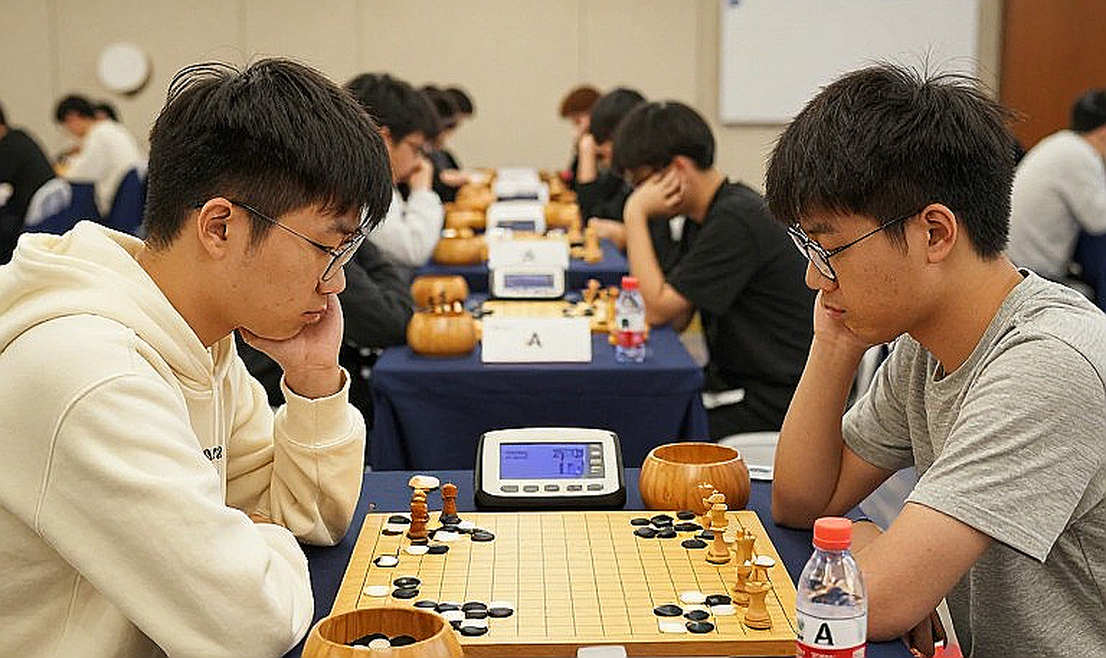
In team chess events, I always watch for a moment almost no one records: the instant a player stands up from the board, pushes the chair in gently, and walks out without looking back at the position they had been sitting over for four hours. That moment is not on the scoresheet. It is not in the news. But the real story of a team match usually begins right there — where a person leaves the board and behind them remains a position that cannot be saved.
I thought of this when the Olympiad bulletin showed the Round 5 result: the Poland women's team defeated the India women's team. Behind that dry line is a longer tail. The report called Poland India's Achilles heel, and added the words "once again." Those two words are what made me stop. In chess, a result can be entirely true and still hide almost everything.
The Chess Olympiad is the largest national-team event in the system of the International Chess Federation (FIDE). It differs from an individual tournament in this way: four boards do not stand alone but are joined into a single block. One win cannot rescue three other boards. One loss can drag the whole team down, no matter how well the other three played.
The Swiss system turns each round into one piece of a larger picture. Round 5 sits in the early middle of an event that usually runs eleven rounds. This is the stage where strong teams begin to pull away, and a defeat is not merely a loss of points — it is a loss of position, of psychological rhythm, before the decisive matches arrive. Drawing on my experience following many Olympiads, a team that loses exactly in Round 5 often has to play the rest of the event in catch-up mode.
There is another layer of context. Indian women's chess has risen in recent years as one of the notable forces in Asian chess, with a generation of young players trained systematically and a squad depth many countries envy. When a team like that loses, people do not ask who they lost to but what they lost to. And this time, the answer points back to Poland.
I must say this plainly from here: the source I have amounts to a single result line and a way of naming it. The four specific boards, the individual scores, the players' names, the course of the games — none of that is in my hands. An honest chess writer does not reconstruct a game from a headline. So this piece does not retell the match. It tells the long tail behind the words "once again," and what a single result line cannot say.
In team chess there exists something I call the bogey opponent — a team that is always unpleasant to face, not necessarily because they are stronger, but because the way they play touches exactly your weak point.
The bogey opponent is not the strongest team. It is the team that, through some mechanism, turns your weakness into their weapon.
For India and Poland, the reporter's "once again" suggests this is not the first time. A football team can keep losing to one opponent because the rival's tactical system locks down its own. Chess is the same, only the battle unfolds more slowly and more quietly.
I once spent nearly a month understanding why one player kept losing to another despite nearly equal ratings. The answer finally lay in something very small: an opening structure the opponent could always force, which sent the player into the middlegame with a defensive mindset. At the top level, the technical gap between leading players is small enough that psychology and preparation become the deciding factors.
That is why I suspect that, digging into the Poland meetings, one would find a cause far more specific than the Achilles heel label. It could be an opening system Poland prepares well and India has never found an antidote to. It could be a time issue — games where India fell into time trouble at exactly the crucial moment. It could be board order, an arrangement that accidentally pushed an unfavorable pairing into exactly the wrong slot.
In team chess, board order matters more than outsiders think. Board one is where the audience looks, but boards three and four are usually where the match is decided. When boards one and two are balanced, the result falls to the last two boards — where nominal pressure is lower but psychological error is larger, because that is where a player knows a small mistake of theirs can be the team's decisive mistake.
I have observed one thing repeating at team events: the winning team is usually not the one with the brightest star, but the one with the steadiest boards three and four. A star can deliver one point, but the other three boards deliver most of the actual score. If Poland beat India through evenness, that is a structural defeat, not an accident.
There is another layer rarely discussed: memory. A team that has lost to a certain opponent steps into the next meeting carrying an invisible weight. Chess players are people who live by memory — remembering every move, every position, every mistake. When a team is called your Achilles heel, that label itself becomes a burden. It makes people play not to lose rather than to win.
In team chess, preparation is not only an individual matter. A team can build an entire arsenal of opening weapons for each board, and when two teams meet repeatedly, the side that prepares more deeply seizes the psychological initiative from the very first move. If Poland really is India's bogey team, the cause may well lie here: preparation designed specifically for each pairing, repeated across events, leaving India to enter each match feeling anticipated.
But this is where I want to push back a little. The Achilles heel label can easily become a trap.
A nickname, or a story that repeats, can explain everything, and because it explains everything, it explains nothing. It frees us from having to find the real cause, and at the same time imprisons the losing team in a destiny with no exit.
I do not have enough data to say why Poland won. And I suspect the reporter is not certain either — if they were, they would not have needed an idiom. An idiom is what we reach for when we lack data but still need a sentence to end the piece.
There is another reading, blunter. Perhaps "once again" does not speak of a psychological wound, but of a gap in level that has not narrowed as much as people think. Perhaps Poland, viewed calmly, is simply the stronger team at this moment, and India — a rising side — losing to a team with a deep tradition is an ordinary thing in chess. The bogey label merely turns the ordinary into the tragic, and tragedy is always easier to write than truth.
Every result has many layers. A single line keeps only the top one. A decent chess reader should remind themselves that below it lie many things untold, and sometimes the untold is the most important.
I once learned something back when I sat behind the microphone, from the times I mispronounced players' names: perfection is only the draft of sincerity. A piece accurate in facts but lacking a soul is as meaningless as a piece rich in emotion that invents the truth. With the India and Poland story, I choose to keep two notebooks: one line for what I know, and one for what I still must wait for.
Sport does not promise victory; it promises only a heartbeat willing to continue. India will meet Poland again, perhaps at the next Olympiad. And by then, the real question is not whether the Achilles heel exists, but what this team has learned from its sore spot.
Chess culture is like a graveyard of names, so their stories can live one more game. A Round 5 defeat only becomes part of the story if someone is patient enough to retell it — not through idioms, but through details.
Perhaps the most memorable thing about this Round 5 is not the score. It is that, after the result sheet was posted, some player on the losing team sat by the board for a few more minutes, looking at the finished position, as if to remember exactly what they lost and where. The microphone does not make the storyteller. It is the silence that stayed at that board that signs every line.